
Showing posts with label career. Show all posts

Tuesday, October 4, 2022

ARE RESUMES STILL NECESSARY?

 by Willette


https://images.squarespace-cdn.com/content/589f62ae6a49636c527f59b4/1535662057716-RDVO0SAWTO8O0QOSEYCN/ResumeWriting.jpg?content-type=image%2Fjpeg

S


ome people, like Jeff Hayden, a contributing editor to Inc.com, don’t think so.  His post, Your Resume Is a Waste of Time: 8 Better Ways to Get Hired for the Job You Want, provides some useful tips.  But, do any of the alternative strategies actually replace a resume?  Hiring managers and recruiters still rely on the resume,” Vicki Salemi, an advisor on the job-search portal Monster.com, told the New York Times.

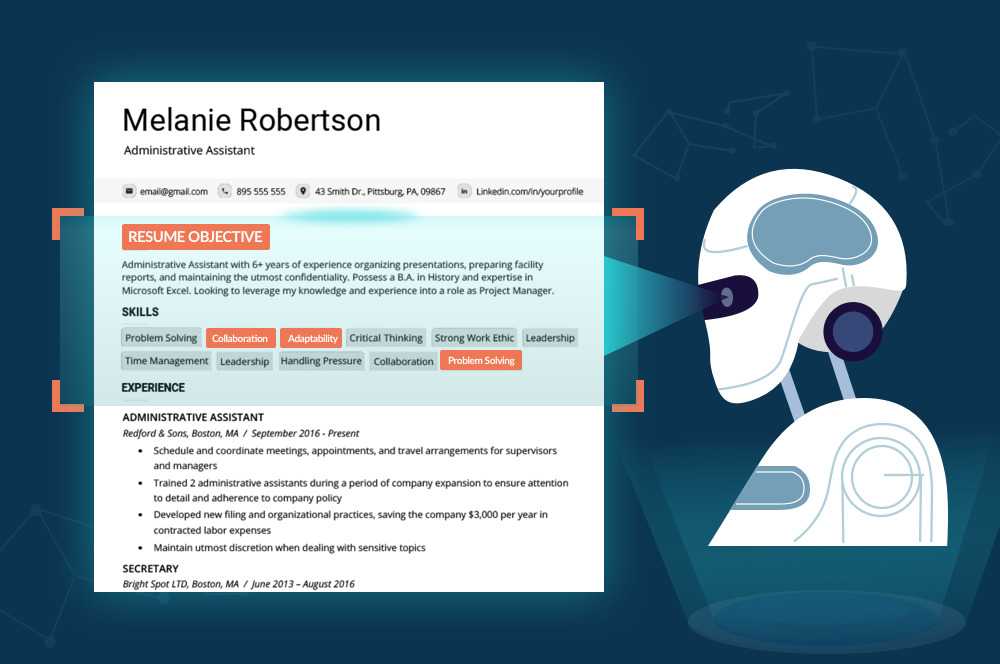
That being the case, you probably already know that, after you submit your resume in today’s HR tech world, it will encounter “Cumbersome application systems, automated filters that identify keywords instead of talent…,” Hayden noted.  As Sean Weinberg, whose free Web RezScore application reads, analyzes and grades resume, puts it, “Your resume has a lot of enemies” and “has to look out for itself.”    

On that point, everyone agrees. 

~Tip~

Take some time to check out jobscan.co, which provides some insight into how ATSs (Automatic Tracking Systems), like Taleo, work and lists the companies that use Taleo.  The company to which you are applying for a job might be on the list.


 Resume filtering software or automated tracking system (ATS) is something you can't control.  
However, you CAN control what YOU DO when composing your resume.  You can control its SOUL.  What’s that?   It’s that authentic armor that gives your resume fundamental power to “leap over tall buildings in a single bound,” or in this case, ATS hurdles.  James Crook, a Marketing Director at MGIS, broke it down this way on his linkedin.com post, The Soul of a Resume:  Without our souls we would be shells and nothing more.  Without its ‘soul,’ a resume is also nothing more than a shell…” consisting “of nothing but empty lists of duties and titles.”

Think of your resume (CV or curriculum vitae, which means “course of life” in Latin) as the historical story of your work (hard work) set in, preferably, a one-page time capsule that advertises/broadcasts your successes/achievements, skillsets and abilities.  In summary, your value.  Your value shouldn’t be distilled down to “empty lists of duties and titles.  

So, how do you go from lists of duties and titles to putting soul (e.g., flavor; density; strength) into your resume?  Think QQK -  

Qualitative,

Quantitative 

Keywords

Qualitative addresses the quality of something.   Quality, or high standards, applies to nearly everything.   We look for quality when we shop for clothes; repairs for electronics, home or car; the food we choose to eat; is a restaurant clean, servers professional/polite, food prepared well/tasty?, etc.  We even look for quality in people in anticipation of having a good relationship.  In your resume, you communicate quality to perspective employers through “descriptive narratives.” 

Descriptive narratives that contain QQK provide context and details about,

a)     the circumstance and process through which you accomplished a task or initiated, developed and completed a project; the steps you took

b)    how it mattered (i.e., impacted/benefited your former employer, employees, customers, clients, community)

Context and details help HR get a better sense of your abilities to focus, strategize and follow through. 

In a resume, qualitative descriptive narratives should be short (two sentences max), and include “action verbs,” which powerfully underpins the “soul” in your resume.  But, use them appropriately and authentically.  Action words are seen in tortuously long job descriptions for some government positions, such as,

resolve conventional problems and situations

manage special projects and assignments

develop special reports

analyze and evaluate information and recommend alternative course of action based upon analyses.

Need help?  Check out 185+ Action Verbs That Will Majorly Impress Hiring Managers, and ACTION VERBS & Transferable Skill Categories.

Quantitative  – Put simply, quantity is anything that can be measured (e.g., the number of “likes” and “views” on social media, number of subscriptions to a YouTube channel, your bank account’s balance, how many steps you walk a day, your blood pressure numbers, how many schools, libraries, hospitals, restaurants, grocery stores, banks, etc. in your community and number of blocks or miles these services are from your residence).  Numbers are solid,” said Weinberg.  They’re persuasive evidence of your qualifications. 

But, you might wonder:  What if I don’t have numbers?  My previous position didn’t require data collection or measurements of any kind.  You could “guesstimate” based on feedback (even in informal settings) from management, co-workers and/or clients.  Your own records/files showing outreach and contacts (phone calls, emails, texts, social media, etc.) may also give you the capability to make a practical assessment or measurement.

Qualitative & Quantitative ~ Two Examples

1.      Here’s an example of a bullet in a resume for a software developer: 

·        Mobilized and provided various support to communities and people donated using the software I created.

Suggestion:  While the bullet contains a number of good action words (mobilized, provided, support, created), the applicant can infuse “soul” with qualitative and quantitative descriptions as follows (in parenthesis):

·        Mobilized (qualify:  mobilized who and how; quantify: how many were mobilized) and provided various support (qualify/specify: kind of support, how supported; quantify: how many people or groups supported) to such communities (qualify/specify: what communities; insert demographics, if possible; quantify: number of communities) and people donated (qualify: what people, are they in a particular profession, location, what did they donate? Money, time, supplies?, etc.; quantify: number of people donated; how much donated) using the software I created  (qualify: software’s name; what it does; is it registered or copyrighted; how does it help users; quantify: year it was created, how long or time it took to create, number of users, how many users it has helped).


2.     Here’s Crook’s example of a bullet on a career counselor’s resume:

·        Assisted clients with resumes.  


Crook recommended the following qualitative and quantitative upgrades:

·        Worked with 25 clients on resumes, job search strategies and networking, 24 of the 25 clients found employment.  

Suggestion:  An applicant could give HR a bit more context (soul) by qualifying the “job search strategies and networking” section in the bullet with one or two specific “job search strategies” (e.g. “scheduled client to attend ABC Job Fair”), with whom they networked.  The name of a person(s) or company networked with is optional.  But, including the type of industry or profession gives a resume more depth/soul.  For example, if the applicant “networked” with a person or persons in a decision-making position in a particular industry, such as fashion, health, education, legal/law, construction, music, engineering (mechanical, civil, chemical, electrical), etc.  Again,  qualitative descriptions/narratives provide context. 

Keywords Matter

You’ve probably heard that mantra often.  Well, it’s true.  Your descriptive narrative should contain keywords that are germane to the position for which you are applying.  Keywords, like a jet engine, propels your resume past electronic hurdles.  You can mine keywords from the job description, so take the time to read it carefully.  Suppose, for example, a job description calls for “expertise in SUMPRODUCT.” (According to excelchamp.com,  SUMPRODUCTis the most useful and power function in Excel.”)  So, instead of simply saying on a bullet:  “Proficient in Microsoft Excel,” specify with the keyword “SUMPRODUCT. And, add a couple of other software functions (tools or applications) with which you have experience.    

In sharing scholarship and employment opportunities with my email contacts, a position for a senior data analyst on Clooney Foundation for Justice’s website came to my attention.  Within the long job description that contains a lot of keywords, part of one sentence reads, “They will be a self-starter….  Keyword?  Self-starter.”  Here is where an applicant, who initiated (self-started), then created/developed and executed a program, project, software, etc., can infuse “soul” into his or her resume by qualifying and quantifying the achievement and the product's success.   

Keywords can also be a part of industry-specific language/terminology (like particular software features).  Even if such keywords are not in a job description, taking the initiative to add a couple of terms unique to your particular profession gives more context and details (quality/soul) to your resume’s descriptive narratives.  Trade industries (e.g., mechanics, plumbers, construction, masonry and so on), have terms for tools and tasks (and software) exclusively linked to the job.  In an automobile mechanic’s world, for example, tools - battery analyzer, wrench/spanner, trolley jack, lift gate, and so on - an applicant may have mastered should be included on their resume.

~Tip~

You’ll also find valuable keywords on the company’s website when you do a search of the employer to whom you’re seeking employment.  Taking the time to search helps you get a better overview of the company’s culture, vision, mission and ethics. 

T


he bottom line is, by working through the QQK process, you’ll be delighted to witness your resume’s SOUL emerge, enjoy the benefits of a carefully crafted resume, and even conclude that resumes are ABSOLUTELY necessary.  

Magic, Miracles & Blessings, 💓

Willette

~ P.S. ~

Infusing “soul” into you communication also works for scholarship essays and business plans.

~ P.P.S ~

To help you along your resume building and job search journey, Indeed.com, lists 12 Job Searching Strategies That Work, along with descriptive narratives.


Saturday, May 5, 2018

PASSION OR CURIOSITY ~ Which is Best for Your Academic and Career Success?


by Willette Coleman


Curiosity.  The dictionary defines the noun as “a strong desire to know or learn something.”  Curiosity evokes one, if not all of the questions:  Who, What, When, Where and How.  For me, curiosity is like solving a mystery (a favorite among my reading genres; preferably historical, such as renown authors, Beverly Jenkins’ historical-based, romance mystery Midnight and Penny Mickelbury’s Carol Ann Gibson’s mysteries).  A good mystery stimulates our curiosity as we follow a protagonist’s investigation of clues that lead to solving a problem (usually a murder or locating a treasure).         

My curiosity was recently aroused as I read a job advice column’s headline: Why Curiosity is More Useful than Passion.  An Internet search revealed hundreds of articles on curiosity for academic and career success.  A Pennsylvania based workplace solutions company, Boyer Management, queried whether “curiosity is the new career super power” and listed Five Reasons Why Curious People Have Better Careers.  These narratives, though valuable, tend to favor curiosity over passion.  

Passion historically, has been the Queen of traits to possess for success in life.  It’s “a strong feeling of enthusiasm or excitement for something or about doing something” according to Webster’s definition, which corroborates the often-heard statement that “passion is when you enjoy doing something so much you’d rather do that than anything else, even if you don’t get paid.”  The University of Virginia Barden School of Business MBA subway ads in Washington, DC alert readers to “Advance a Passion.  Advance a Position.”  And, business consulting firm, Deloitte, presented a plan for Passion at work on its website.    

My experience is that curiosity and passion are twins, on many levels.  Creativity is one.  Chefs, for example, have a passion for cooking and curiosity inspires them to invent/create imaginative, healthy, mouth watering, award winning recipes (some with surprising ingredients).  Another is that passion and curiosity embody enthusiasm.  Employers as well as customers are delighted with enthusiastic workers.  Neither passion nor curiosity discriminates.  There’s no racism, gender-ism or age-ism; doesn’t matter if you’re 9 months, 9 years, 19, 90 or 900.  The age stereotype, by the way, is that we only have passion in our youth; that older adults lack passion.  That “fake news” has impacted people’s narrow attitude towards older people for decades.  Forbes magazine, Debunking Myths About Worker Passion, reported that a Deloitte’s Center for the Edge confirmed that older workers are just as likely to be as passionate (and curious) as younger workers.  And, according to the senior living blog, APlaceformon.com, “Passionate workers are not concentrated in any age group.”

Yet, as every family knows, twins have differences, even when we can’t tell them apart.  One of the differences is that passion is more of a learned trait while curiosity is instinctive.  The root of that instinct “…can be linked to a trait of the human species call[ed] neoteny,Tom Stafford wrote in his article, Why we are curious.  He added that “This is a term from evolutionary theory that means the ‘retention of juvenile characteristics’,” into adulthood.  In other words… our inner child.  Another difference is sustainability.  While each possesses sustainable powers, passion for a particular person, place or thing, over time, might wane when we no longer feel that special music that makes our insides dance.  And, although passion is akin to curiosity, curiosity is not always linked to passion.  We say to ourselves or to someone, “I’m just curious.”  Once our curiosity is satisfied, we have no passion to invest time and thought-energy into the subject.   


 One other thing, unlike passion, curiosity crosses species (which confirms its “instinct” status).  Training dogs to sniff out contraband is preferred among law enforcers because, along with their superior sense of smell, dogs are curious.  


Of course, cats take center stage among curious animals.  While the age old saying goes:  “Curiosity killed the cat,” curiosity can awaken hidden talents, as it did for me, enhancing my passion for writing.

One day, long ago, I was introduced to Steenbeck.  There it stood (yes, it, not he) in a dimly lit room.  The steel gray table showed off four shiny metal plates that would spin when it was “on.”  Its small screen sat in the center of the machine, like a mirror on a vanity table.  My curious inner child shouted:  “WOW.  WHAT IS THAT THING AND WHAT DO YOU DO WITH IT??!!”  Curiosity led me to learning how to edit 16mm film with audio tracks (now, with digital editing, the machine is considered “old school”); becoming one of maybe four African American women who were members of the Motion Picture Editors’ Union in New York (circa 1970s), and later producing a couple of documentaries.  (The Movieola was another “curious” machine I learned to master.)  Today, I apply the skills I learned - organizing and editing story/picture, and scene and dialogue transition and continuity – to my blog, essays, grant proposals, children’s books and ghostwriting.

Recently, the twins helped young learners experience their own awakening in an inter-generational, career-focused Project Based Learning endeavor I facilitated.  The fifth graders started out with a passion to “learn,” to “know” about careers and scholarships.  After each of the 15 students was divided into 3 groups, each group selected a career of interest.  To satisfy their curiosity about what tasks people perform in those jobs, how a job is different from a career, what education and training they needed to prepare for the career, and where to get the money to pay for the education or training, they did Internet searches at sites like the Department of Labor and Payscale.com; interviewed career veterans from diverse professions; organized notes, and immersed themselves in technological sensory input by creating a PowerPoint presentation that they showcased for their community, peers, teachers, administrators and stakeholders.   

The project challenged the students in “critical-thinking, problem-solving, and analytical skills….,” as mandated in Common Core ELA Standards, as well as planning, organizing facts and information from reading complex texts, interviewing techniques and public speaking.  The students also concluded that the difference between a job and a career is that “you choose a job; a career chooses you.”  They assessed, however, that sometimes a job can turn into a career. The outcome is that each student will be able to use these measurable and interminable skills throughout their personal and professional experiences as they go forward as teenagers and adults. 

Passion and Curiosity also awakened a hidden talent in a few of the students.  One said she was thinking about working with animals as a marine biologist, veterinarian or zookeeper.  She already had a passion for caring for animals having once restored the health of a baby bird that had fallen from its nest in a tree in her backyard.  She told me that she scooped it up just in time; a neighborhood cat was approaching.  Another student had a passion for reading.  Instead of talking and laughing with the other students on the bus ride on field trips, he always read a book.  He was curious about the different kinds of writing genres and whether writers made a good living.  ((I hesitated to tell him that writing can be intense, even frustrating, and while passionate writers are rewarded emotionally (its cathartic) and viscerally, many have suffered financially.))  When the time comes, the fifth graders will be able to apply for an unlimited number of scholarships at Fastweb.com and College.USAtoday.com to get education and training for their passion.  

So, what do you think?  Which is best for academic and career success?  Passion, curiosity, or both?  Thanks for reading.  Thanks for sharing. 

Magic, Miracles & Blessings,

P.S.  Remember, scholarships are also available for students studying in disciplines that don’t require a college degree.  I’ve listed some in my post I DON’T WANNA GO TO COLLEGE.  See more scholarships at my post FORGET LOANS!  Get Free Money!