How Parents and
Grandparents can "Spark Joy" in Reading for
Reluctant Readers
Reluctant Readers
Here are Low Tech, Common
Sense, CAN DO, Old School Tips
&
Career Suggestions
&
Career Suggestions
7 of
14 Suggestions
by
Willette Coleman ©2019
While playing the occasional lottery at
my corner convenience store, one of the managers shared his concern for his tenth-grade
daughter. “She doesn’t like to read,” he said anxiously. As a Career Planning and Scholarship Coach
and English Language Arts (ELA) tutor, I’ve noted that he’s not alone, as a
parent, in his concern.
The store manager confided that he thought “comprehension”
was his daughter’s struggle. She’d been cleared
after being tested for any reading difficulties. I told him that I’ve encountered quite a few middle
and high school youths who can read,
fundamentally, but don’t like to read,
and comprehension turned out to be the
major barrier.
 | |||
| The author shares techniques she has used and personal anecdotes that reveal much about reluctant readers |
“Reading comprehension
is the process of constructing meaning from text,” said Keith Lenz, Ph.D. In other words,
comprehension involves readers being able to fully figure out, put together and
understand what the author is saying, or what the narrative or text means.
The manager wanted to know what he and his wife could do to
help their reluctant reader become a joyful reader. I suggested he and his wife read Marilyn Reynolds' I WON'T READ AND YOU CAN'T MAKE ME, and gave him a list of 14 low tech, common-sense, old school, can do suggestions. (See the list at the end of this opening narrative.) I also shared with him that incomprehension
might not be his daughter’s fault. The writer/author could be at fault!
The symbiotic relationship between reader and writer is an
aspect of reading comprehension rarely addressed. But Dr. Lenz unflinchingly determined that: “Reading
comprehension involves at least two people: the reader and the writer.”
“Some writers,” he added, “are better writers than others, and some
writers produce more complex reading material than others.” He continued that “text that is well organized and clear is called considerate text." On
the other hand, "inconsiderate text" is “poorly organized [thus] difficult to understand.”
Reading poorly structured or “inconsiderate” text can be frustrating,
even tortuous to middle grade and high school students. (Adults can also struggle with such material,
as did book
reviewer, Eric
Foner when he addressed a problem with “structure”
in “SEPARATE. The Story of Plessy vs. Ferguson and
America’s Journey from Slavery to Segregation,” saying it produced “chronological confusion.” Furthermore, the title is misleading. Segregation was the central, systematic heart
of slavery, so it doesn’t make sense for the writer to say America journeyed to segregation.)
Reading inconsiderate
text that makes sense to the author does
not translate to the reader. When that
happens, the
writer dishonors his or her “contract”
with the reader to provide a clear and organized narrative - whether it's fiction or nonfiction - as Professor Tilar J. Mazzeo lectured in her
writing course.
Reading comprehension also entails “using background knowledge
to construct an approximate understanding of the writer's message,” Lenz stated. “Background knowledge” means “…the reader's knowledge of the topic,
knowledge of language structures, knowledge of text structures and genres,
knowledge of cognitive and metacognitive strategies, [in addition
to] their reasoning abilities, their
motivation, and their level of engagement.”
Many middle and
high school readers don’t have the background knowledge to overcome the
barriers presented in “inconsiderate
text.” And, since reluctant readers may already be burdened with a trembling
sense of reading intimidation, they feel powerless to critique whether their
inability to comprehend is the author’s fault.
Clarity
Clear sentence and paragraph structure are key to
comprehension in any form of written
communication – from text books, newspapers, magazines, instructional (e.g.,
tests) and marketing materials (e.g., brochures), to fiction and nonfiction. I’ve observed that when students write essays
for scholarships or apply for jobs in their chosen career, some applicants find
it stressful to respond to unclear or confusing instructions in the
application. So, they hesitate or give
up altogether.
Complicated and confusing sentence structure is one of the complaints
students have made against the SAT’s and ACT’s instructions. Often, they read the tests’ instructions or directions
two or three times to get some clarity about what to do. Many will still struggle. Fortunately, that strife has been removed since,
“…well over 1,000 colleges and
universities [no longer] require SAT
or ACT scores…,” according to the Miami Herald newspaper. And, in 2023, Harvard University will no longer require
scores from the SAT’s written portion.
One more note, Natalie Wexler, senior education editor at Forbes.com provided significant critical thinking on the way reading comprehension is taught in, Why We're Teaching Reading Comprehension in a Way that Doesn't Work.
One more note, Natalie Wexler, senior education editor at Forbes.com provided significant critical thinking on the way reading comprehension is taught in, Why We're Teaching Reading Comprehension in a Way that Doesn't Work.
Boredom
Reading comprehension is more difficult when a reluctant reader is
simply not interested in the subject or finds a book to be boring. This
reflects back to Lenz’s “motivation”
and “level of engagement,” which, in this case,
there are none. "Let him or her put the book down," most educators advise. Parents and
grandparents who force a reluctant reader to stick with difficult or dull reading
material reinforces the idea that reading is a chore to avoid and makes her or
him even more resistant.

In middle and high schools, a “required” reading list is
standard practice. But, what if your son
or daughter doesn’t like any of the books on the list or thinks they’re boring? This can be especially true for African
American youths, and for African, Hispanic and Latinx youths where English is
their second language. Required reading lists,
generally, contain few books (if any) with characters that look like them and
stories that speak to their culture. On
a personal note, the main reason I cut history classes in high school, in New York, was because
the text books and the books on the required reading list lacked diversity. None of the all- male pioneers, heroes, inventors,
artists, scholars, decision makers and scientists looked like nor referenced me,
anyone in my family or my neighborhood.
I forced myself to read Silas
Marner, but, I found it boring and unrelatable. I’ve since realized that, as a teenager, I
didn’t have and wasn’t given the background
knowledge of the topic, nor the language, genre and text structure. (During my extended family visits in Alabama, in segregated
schools, I learned that an African American scientist, George Washington Carver, developed 300
uses for peanuts, such as peanut oil, soy beans and sweet potatoes. Naturally, my “motivation” and “level of
engagement” rose.)
The diversity void in education is one of the reasons the
late Howard Zinn created an education project
that evolved into the Teaching for Change organization that tenaciously
promotes and executes diversity in course material in classrooms to “…build a more equitable, multicultural
society….”
Parents or grandparents can talk to the teacher (ideally,
during parent/teacher conferences), if their daughter or son is bored with or
don’t like a book on the required reading list, and ask if they can substitute
another book. It doesn’t hurt to
ask. If that doesn’t work…,
- Parents or grandparents can take 20 minutes to read passages from the least “boring” or “hated” book on the list and look for points of interest to bring to their reluctant reader’s attention. After reading a passage to their reluctant reader parents or grandparents can ask: What do you think about that?” Twenty minutes out of a parent’s or grandparents' day from watching sports or talking on the phone could prove to be extremely beneficial for their reluctant reader.
Parents and grandparents CAN also DO one or more
of the following 7 of 14 suggestions on the list I gave to the store manager. (Seven suggestions will be in Part 2.)

1. Model Reading
- 20 Minutes. We all know that children learn by example.
For them, seeing (and hearing) is imitating. Like sponges or Bounty paper towels, they
soak up almost everything they see parents, grandparents and other adults do. So, in the majority of cases, when parents, grandparents and family members show they like to read – through Model
Reading - their children will follow the same path.
- Block out as little as 20 minutes a day from your busy schedule and establish a Reading Routine where you read together. Newspapers (including the comics section), books, magazines or newsletters; it doesn’t matter. This interpersonal experience helps TREMENDOUSLY! Turn off your phone and e-devices because they can be distracting. An Elon University study found that, “technology has a negative effect on both the quality and quantity of face-to-face communication.”
- As you read, make comments and share interesting passages with your reluctant reader, especially information that relates to juvenile issues, such as health (e.g., vaping), safety (e.g. bullying, gun violence), laws about marijuana regulations; fashion, the arts, music (e.g., news about their favorite musician or rapper), etc.
- When children are younger, encourage them to Read Back to an older sibling or to you. As children read to someone, they are “modeling” what was read to them. And, in this face-to-face, interpersonal interaction, the child, tween or teen gets a good feeling that they are being listened to; being given attention.
- Read anywhere. Parents and grandparents can read to children on public transportation, in the car in bumper-to-bumper traffic, in coffee shops, the mall and so on. It’s rare, but seeing a parent or grandparent reading a book with his or her child on the bus or subway is a delight. This early reading routine advances to teen years where your daughter or son will embrace the JOY in reading instead of being a reluctant.
2. Read the same book at the same time. Let your reluctant reader choose a book that interests her
or him (even if you disagree
with their choice) and buy 2 books. If purchasing 2 books is out of the question,
borrow them from the library. But, the
cool thing about owning books is (a)
reluctant readers can build their very own library and (b) the reader
can underline words and highlight passages in their book, as well as write notes in the
margins (as long as the book is not a “first edition” where marks of any kind
diminishes its value, which I discuss in Part 2). Aside for that, writing notes is like having
a conversation with the author when you come across information, phrases and
terms with which you disagree or vigorously support, or the text inspires a
bright idea or deeper thought.
Buying books can be expensive, but at Firstbook.org, parents and grandparents will find that $15 books can sell for $4.00. Parents, grandparents and educators can also purchase books by the box filled with 12 to 46 books - all one title. Keep two or more books for your family members and generously give the remaining books to neighbors with children and reluctant readers. The non-profit’s marketplace makes owning books and building a library in your home easier on the budget.
Buying books can be expensive, but at Firstbook.org, parents and grandparents will find that $15 books can sell for $4.00. Parents, grandparents and educators can also purchase books by the box filled with 12 to 46 books - all one title. Keep two or more books for your family members and generously give the remaining books to neighbors with children and reluctant readers. The non-profit’s marketplace makes owning books and building a library in your home easier on the budget.
- Parents and grandparents can guide their reluctant reader to books where the story and characters relate to her or his interest, like the arts, the environment, animals, sea creatures, technology, cooking, being nosey (investigating), the stars (astronomy or astrology), gardening, plants, sports, etc. At Readbrightly.com, parents, grandparents and their reluctant reader can choose from a wide range of age-appropriate selections in different genres, including sports.
- Reading the synopsis on the inside flap or on the back of the book and reading a couple of pages helps reluctant readers decide which book interests her or him.
- Comic books and Graphic Novels have proven to profoundly “spark joy” in reading for reluctant readers. I appreciate these reading forms, but many tend to have violent content. Parents and grandparents and their reluctant reader can find a large selection of age-appropriate, nonviolent comic books and graphic novels at Commonsensemedia.org. By the way, if the book your reluctant reader chooses contains a lot of violence or objectionable material, have discussion about whether reading that kind of material at a young age – even as an “old” teenager – is unhealthy. Child and adolescent psychologists express opposing views.
After reading a few pages or chapters of the chosen book - bought or borrowed -
- Discuss the characters’ personalities, conflict or dilemma; consequences for bad or good choices made by one or more of the characters; what the characters said, how they dresses, where they live and what you think will happen.
- If a character made the wrong decision, ask your daughter or son what decision she or he would have made.
- Connect the story or a character’s situation with issues relevant to your reluctant reader’s life, a school mate’s or friend’s life, or life in general.
- Discuss the story’s setting. If the story is set in a non-fiction geographic location, take the time to find the state, city, country, continent or island on a physical map or globe.
- At “the end” of the bought or borrowed book, discuss how you felt as you read the story. You may learn that you and your reluctant reader feel differently about some parts of the story and feel the same about other parts.
- Talk about how you would have ended the book differently.

3. Reading fun & games. Sports, like basketball, are fun, but so is reading. Here's how parents and
grandparents can help reluctant readers have as much fun reading as with sports.
- Make books come ALIVE! When you read with your reluctant reader, become the characters in the book. Parents and grandparents can be one or more characters and your reluctant reader can take on one or more roles.
- Challenge your reluctant reader to find typos in a book. (I’ve flagged typos in some of the books I’ve read that were published by mega, long established publishing houses, like Random House, that have a pool of professional proofreaders and editors.)
- Storytelling card games. There are many, but a father’s review of the storytelling card game, The Mystery Mansion, moved me add it on my things-to-purchase list. At Atlas-games.com, parents, grandparents and their reluctant reader can make personal, storytelling card games.
- Educational Jigsaw puzzles strengthen reading skills as well as background knowledge. Puzzles with a historical theme, like the colorful and detailed Votes for Women, provide mini lessons about female and male voting rights advocates.
4. Vocabulary. Knowing the meaning
of words and correctly pronouncing
words strengthens reading comprehension. According to a University of Oxford
article, Reading comprehension and vocabulary: what’s the
connection?, “…gains in
vocabulary knowledge are associated with gains in reading comprehension.” So, parents
and grandparents can and should -
 |
| https://s3.envato.com/files/235609003/Dictionary%20Success%20Magnified.jpg |
- Keep a dictionary in an accessible place in their house or apartment. Using a dictionary (instead of constantly Googling) is critical to building a remarkable vocabulary, learning word-definitions and improving middle and high school students’ cognitive skills. (Too often, I’ve been amazed to find no – nada - dictionary in some of the classrooms where I’ve tutored.)
- Word-Races. Searching for a word in a dictionary can be like solving a mystery. When you come across an unfamiliar word in any reading material, underline the word and challenge your reluctant reader: “I bet you can’t find that word in 30 seconds,” then start a stop watch. When he or she locates the word, ask them to read the definition to you.
Turning the pages in a dictionary (including hearing the sound of
the pages as they are turned); running a finger down the page to locate a word,
feeling the texture of the paper, seeing all the words go by during the
search, and successfully finding the word,
stimulates the senses (i.e.,
sensory processing). The process of turning pages and alphabetically
searching for a word also strengthens cognitive skills, improves memory,
attention, organization and reading. E-devices
like phones’ (tapping and swiping) "instant gratification" doesn’t provide those
unique sensations. Also, some
psychologists report that too much
immediate gratification can diminish our cognitive skills, such as patience, as well as contribute to
laziness.
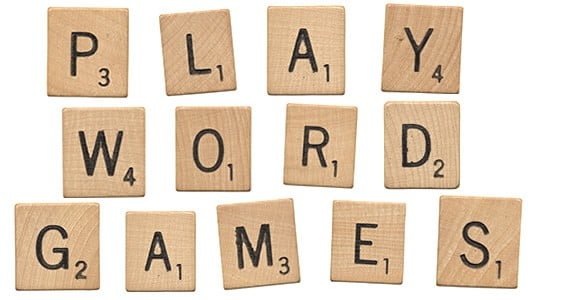 |
| https://androidcure.com/wp-content/uploads/2016/08/best-word-games-android.jpg |
- Word board games. Games, like the unique, high stakes, “war of words,” word-building game, Last Word Standing and Scrabble or Boggle, helps reluctant readers use their brains creatively and problem-solve; increases attention span, and improves vocabulary, punctuation and spelling, according to parenting.com. (Parents and grandparents can compare the difference between these two word games at Boggle vs. Scrabble.) Parents, grandparents and their reluctant reader can choose from a variety of word-board games at understood.org. Uncommongoods.org also has an outstanding selection of educational word games and puzzles.
- Crosswords puzzles are vocabulary builders that can motivate reluctant readers to take the time to look up definitions to new words.
- Word-search puzzles help children see the value in words and helps with spelling, definitions and pronunciation. Introduce word-search puzzles to young readers beginning in first grade and continue through teen years. With this foundation, children may be less likely to become reluctant readers when they’re older. Parents and grandparents can download age-appropriate, printable copies of word-search puzzles at Education.com. I have purchased word-search puzzle books at discount stores, like 5 Below and Target, for the first, second and third graders I’ve tutored.
 |
| https://i.pinimg.com/originals/be/58/f5/be58f582e749c1f722df0f38be5e0995.jpg |
5. Suggest books made into movies that your reluctant reader likes. She or he might enjoy getting more details and gaining more knowledge about the movie’s characters and the story’s plot, from the book. Parents and grandparents can –
- Encourage their reluctant reader to look out for information in the book that was left out of the movie. Again, read the book with her or him and compare together.
- In reverse, prompt him or her to identify what the screenwriter and producer put in the movie what wasn’t in the book.

6. Theater or school plays can “spark joy” for reading in reluctant readers because plays “give students reason to read aloud,” says Reader’s Theater website. To perform on stage, they must read the script and remember the dialogue. Actor and rapper, Will Smith, said he learned the dialogue of each of the characters in the sitcom Fresh Prince of Bel Air.
- Parents and grandparents can inquire if the school their reluctant reader attends has a drama class and encourage her or him to audition when the teacher recruits actors.
 |
| https://cdn.shopify.com/s/files/1/0240/3893/products/sewing-school-for-teens.jpg?v=1516223984 |
7. Hands on. Some reluctant readers are more tactile; that is, they like doing things with their hands (touching). Hands-on projects strengthen adolescents’ sensory processing and visualization skills.
- If your reluctant reader shows an interest in drawing, painting/coloring, cooking, gardening, growing house plants, writing, singing, dance, photography, making movies/videos, fashion, building/constructing things, etc., parents and grandparents can help her or him choose books related to that particular interest. Your reluctant reader’s love for painting or coloring, for example, could lead to a career as a chemist like Balanda Atis, a “color creator” at L’Oreal’s Multicultural Beauty Lab.
- In school plays, reluctant readers can design and build sets which require reading instructions, as well as calculating math. This interest could lead to a career as an architect, like Women in Architecture. Building sets also involves carpentry, and, as a career, carpenters (normally associated with building houses and office buildings) are needed for the performing arts (e.g., theater, television - from soap operas to game shows - and movie productions). FYI: Here’s a job description for a professional carpenter in a theater, in Washington DC.
- Costume design is another career in the performing arts that involves math (measurements) and, yes, reading. Ruth E. Carter was the costume designer for the hugely successful, multi-million- dollar movie, Black Panther. See costume design education requirements and job description here.
See PART 2 for 4 more suggestions and PART 3 for the last 3 suggestions.
If you have some old-school, common sense tips that parents and grandparents can use to help a reluctant reader become joyful readers, please share.
Magic, Miracles & Blessings,
Willette